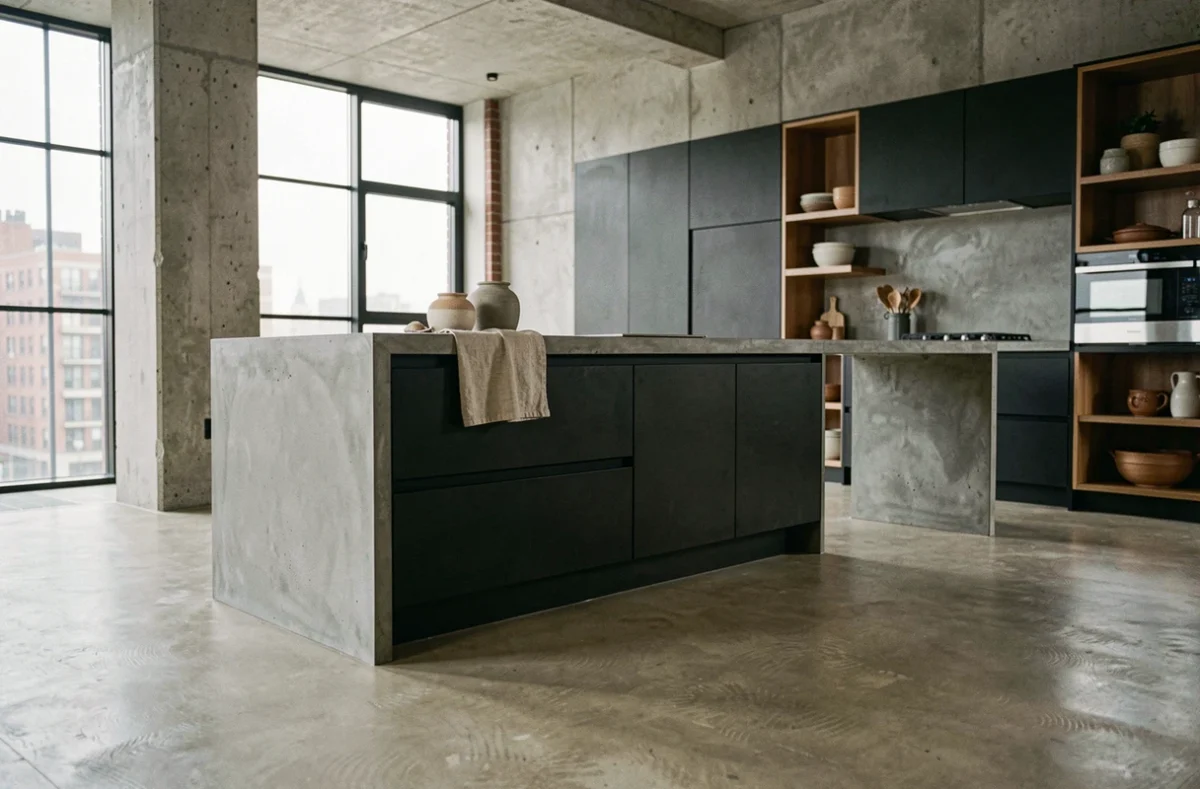
A cracked living room floor under old tiles, a bathroom with poorly aging wall coverings, a kitchen countertop that needs modernizing without tearing everything apart: polished concrete addresses these three situations with a single material. However, it is essential to understand its constraints before diving in, as this coating does not forgive approximation in substrate preparation or final protection.
Polished concrete on existing substrate: what the material corrects and what it does not
It is often said that polished concrete covers everything. In practice, it is a finishing coat a few millimeters thick, not a leveling screed. It does not compensate for significant flatness defects or structural issues of the substrate. Active cracks or movements in the substrate may reappear on the surface.
Before any application, the stability of the substrate is checked. Well-bonded tiles, with no loose tiles, can serve as a base. A leveling compound is sometimes necessary to smooth out irregularities. If the substrate moves (softwood floor, unstabilized slab), the polished concrete will crack, regardless of the care taken during installation.
Professionals listed on architop.be systematically apply a suitable primer for the type of substrate (cement, tiles, treated wood). This step is crucial for the longevity of the coating.
Polished concrete in the bathroom: protection matters more than the coating

The bathroom remains the room where polished concrete raises the most questions. The durability in a wet room depends on the protection system, not the polished concrete itself. Without suitable varnish or wax, water eventually seeps in and the coating deteriorates.
A two-coat polyurethane varnish is the most common finish for bathroom walls and floors. For an Italian shower, a waterproof membrane is usually added beneath the coating. Cleaning is then done with mild, non-abrasive products to avoid damaging the varnish.
Periodic maintenance of the varnish
The protective varnish is not eternal. Depending on foot traffic and water exposure, the protective layer needs to be renewed every few years. It can be identified when water no longer beads on the surface. A light sanding followed by a new coat of varnish is sufficient in most cases, without needing to redo the coating.
Polished concrete and underfloor heating: the heating protocol
Polished concrete is compatible with hot water and low-temperature electric underfloor heating, but installation requires a precise protocol. The first heating must be done before applying the coating. The heating is then turned off at least 48 hours before installation and can only be turned back on at least 48 hours after finishing.
Skipping this step can cause microcracks within the first few weeks. Feedback varies on this point depending on the heating systems, but the principle remains the same: the substrate must have undergone its thermal expansions before receiving the coating.
Choosing the finish of polished concrete: matte, satin, or glossy varnish
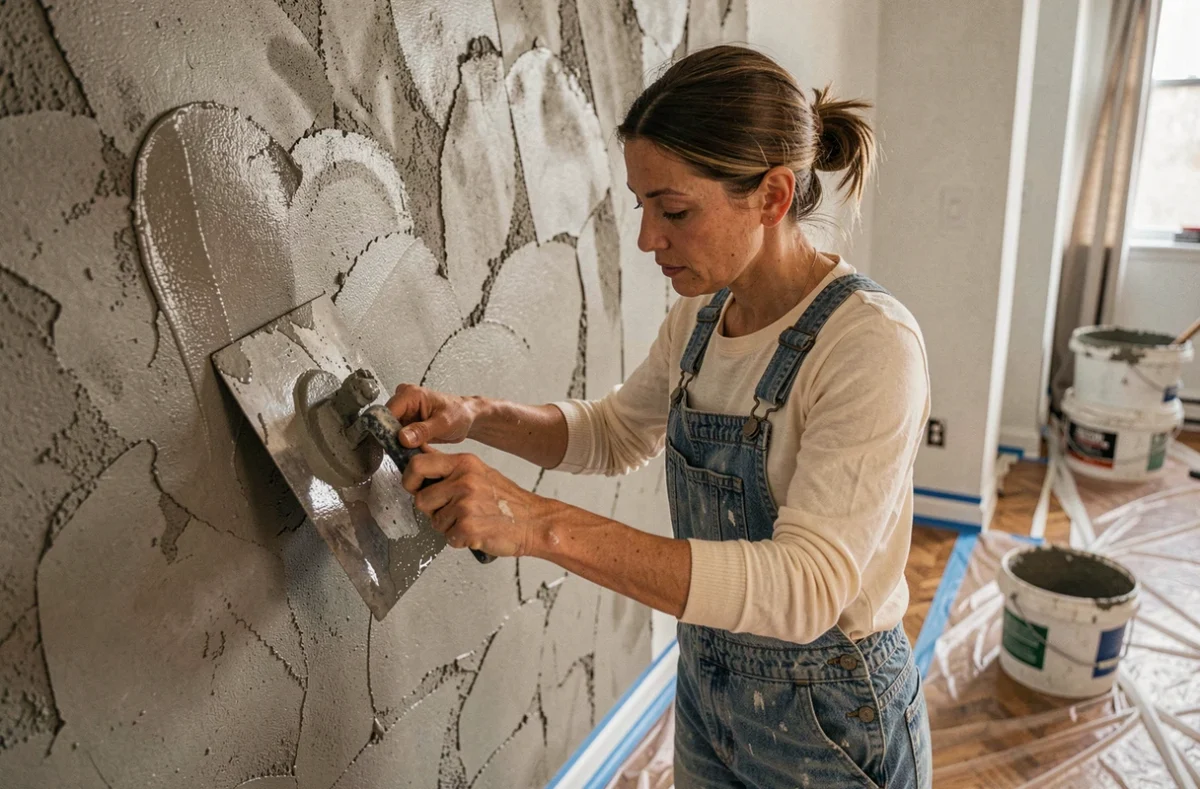
The final appearance depends as much on the finish as on the chosen color. Three main options are available:
- The matte finish gives a raw look, close to natural concrete. It better masks micro-scratches but shows water marks more in a kitchen or bathroom.
- The satin finish offers a compromise: it reflects light slightly without creating a mirror effect and resists everyday stains adequately.
- The glossy finish (high-protection varnish) enhances the depth of the color and makes regular maintenance easier, but makes every scratch more visible.
For a living room floor or a living space, satin remains the most versatile choice. In the kitchen, on a countertop exposed to splashes, a varnish suitable for food contact is recommended.
Light shades and white polished concrete
White polished concrete or light shades visually enlarge a narrow space. They are often found in bathrooms and hallways. The downside: very light shades reveal dirt more and require more regular maintenance.
Dark shades (anthracite, slate gray) are better suited for large areas where natural light is abundant. They create a depth effect but can darken a small interior space.
Daily maintenance of polished concrete: actions that preserve the surface
Polished concrete does not require special products daily, but a few habits can extend its lifespan:
- Clean with a mild soap diluted in warm water, avoiding any acidic or abrasive detergent that would damage the protective varnish.
- Quickly wipe up staining liquids (wine, coffee, vinegar) on a thick unvarnished countertop or floor.
- Never use a steam cleaner directly on the surface, as concentrated heat can locally detach the varnish.
- Apply a maintenance wax once or twice a year on floors to maintain surface hydrophobicity.
A well-protected and properly maintained polished concrete retains its appearance for many years. The determining factor remains the quality of the initial installation and adherence to drying times between each layer, from the coating to the final varnish.