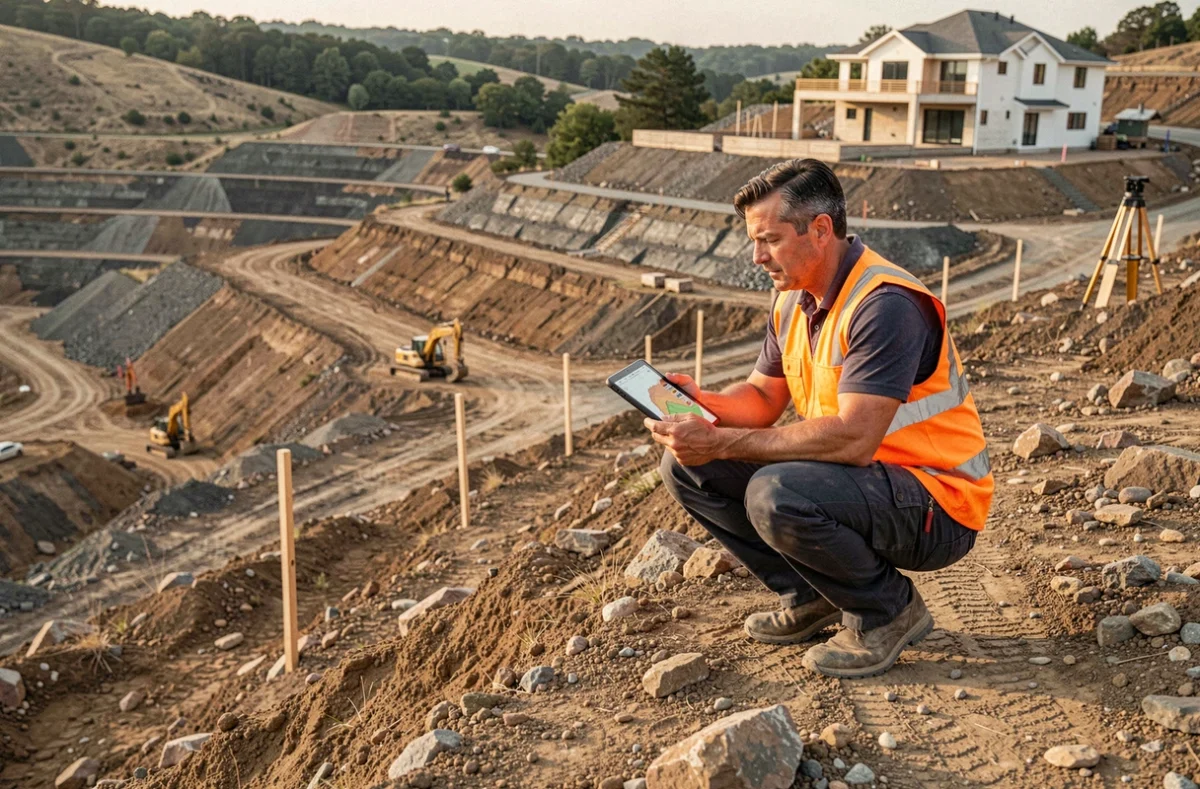
Earthworks on a slope are not just a more expensive excavation-filling process than on flat land. The real difficulty lies upstream of the site, in the geotechnical assessment of the soil and the regulatory obligations that condition the final cost much more than the slope percentage.
Study G1, study G2: the real factor that conditions the cost of earthworks on a slope
We regularly observe project owners requesting an earthworks quote without having a soil study suited to their project. The result: an initially attractive estimate, followed by additional costs in foundations, drainage, or retaining structures that blow the actual budget.
Since October 1, 2020, the sale of a buildable vacant land located in an area with medium or high exposure to shrink-swell clays must include a prior geotechnical study G1, at the seller’s expense. This study identifies the general risks of the site, but it does not size anything.
The G2 is the one that matters for earthworks. It adapts solutions to the specific project: foundation depth, slope stability, type of retaining structure, management of runoff water. Without G2, an earthworker estimates blindly. To obtain more information about Encore Le Printemps, it is useful to cross-reference this geotechnical data with the price ranges observed according to the chosen techniques.
A clayey sloped land combines two cost-increasing factors: the ground movement related to the slope and the risk of shrink-swell that requires deeper foundations or reinforced drainage systems. Ignoring either one leads to underestimating the budget by several thousand euros.
Urban planning formalities for earthworks on a slope: thresholds and obligations
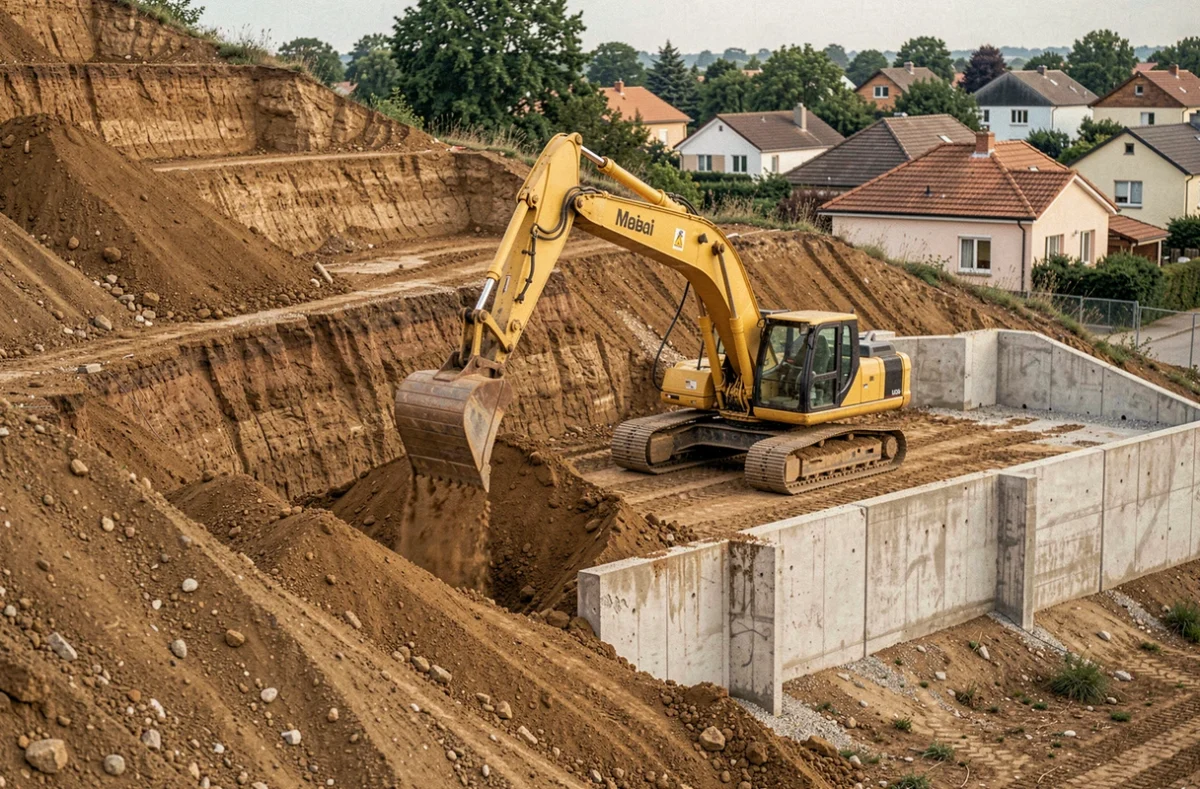
The slope percentage alone does not trigger an administrative obligation. It is the height and area of the earth movements that matter.
- Excavations or fill exceeding 2 meters in height over at least 100 m² may require a prior declaration of works.
- Beyond certain height and area thresholds, a development permit becomes necessary.
- The local urban plan may impose additional constraints: setback from property lines, maximum height of retaining walls, management of rainwater on the plot.
We recommend consulting the urban planning service before any quote request. A serious earthworker incorporates these constraints into their estimate, but an administrative refusal during the project generates costs for equipment immobilization and rework that increase the bill.
Classification of soils and direct impact on earthworks pricing
The nature of the soil determines the type of machinery needed, the extraction rate, and the disposal cost. The classification into categories (often referred to as K1, K2, K3 on estimates) reflects this reality.
A loose soil (topsoil, sand) can be excavated quickly with a standard mechanical shovel. A rocky or semi-rocky soil requires a hydraulic breaker, or even blasting in extreme cases. The transition from loose soil to rocky soil can multiply the extraction cost by three or four.
On sloped land, the likelihood of encountering heterogeneous geological layers increases with the slope. A two-meter elevation cut may pass through clay, fragmented limestone, and solid rock. Each layer alters the productivity of the site and the volume of materials to be disposed of or reused as fill.
Reuse of excavated materials: an underestimated budget lever
When the excavation-filling is balanced, the extracted soils upstream are used to fill downstream. This scenario significantly reduces transport and landfill costs. However, if the nature of the soil prevents reuse (expansive clays, polluted soils, overly heterogeneous materials), the disposal of excavated materials becomes the primary expense after the earthworks themselves.
Drainage and retaining structures: the additional costs that the earthworks quote does not always mention
A well-structured earthworks quote on a slope details the following items beyond simple earth movement:
- Peripheral drainage (drainage trench, agricultural drain, collection pit) to channel runoff water and infiltrations.
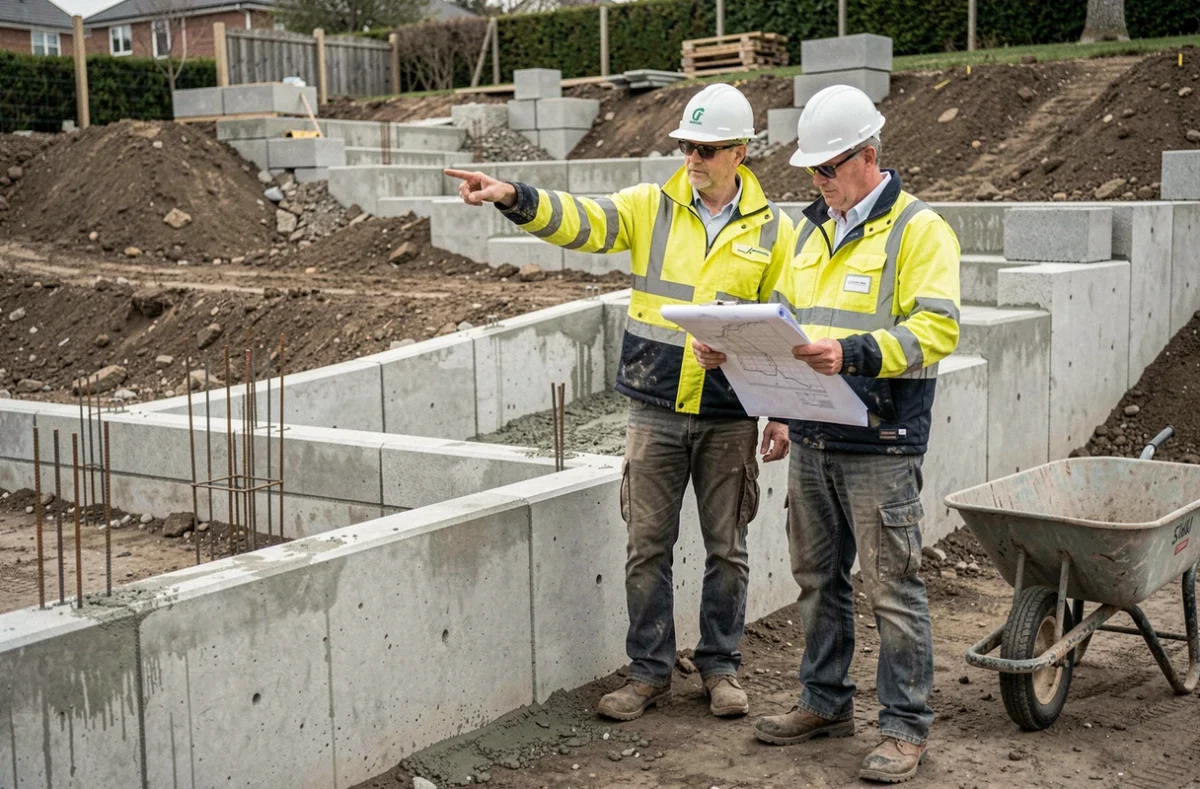
- Retaining structures (reinforced concrete wall, gabions, rockfill, gravity wall) whose sizing directly depends on the G2.
- Layered compaction of the fill, with density control if the project requires it.
- Management of rainwater on the plot, often imposed by the local urban plan in urbanized areas.
An earthworker who only estimates the excavation-filling on sloped land provides an incomplete quote. We find that the most frequent disputes arise from this omission: the client discovers during the project that a retaining wall or drainage system is necessary, without a budget line planned.
Access to the site: a cost factor often overlooked
On sloped land, access for machinery conditions feasibility and price. A 19-ton truck cannot maneuver on a narrow hillside track. If the site requires smaller machinery or staged delivery, the duration of the work increases proportionally. Difficult access can extend the project by several days, with a direct impact on equipment rental costs and labor.
Earthworks on a slope remain a project where preparation absorbs a significant portion of the overall budget. Investing in a G2 study, checking urban planning constraints, and requiring a detailed quote outlining each item (drainage, retaining, disposal) are the three levers that prevent overruns. The price per square meter displayed by online comparators never reflects this complexity.