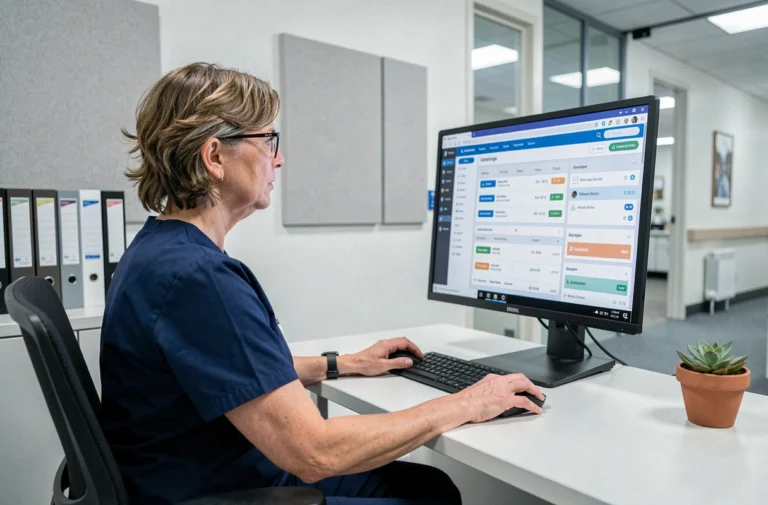
The incessant evolution of the web and high-tech world is radically transforming our daily lives. The advent of smartphones has disrupted our communication methods, while artificial intelligence and automation are redefining the world of work. Connected devices, from voice assistants to smartwatches, enrich our home experience. The healthcare sector also benefits from these advancements with more accurate diagnostic devices and personalized treatments. Even our cities are adapting, becoming smarter and more efficient. This digital revolution, at a breakneck speed, is changing social interactions, media consumption, and access to information.
Technological Innovations and Their Impact on Daily Life
New technologies are shaking the foundations of our daily lives. They infiltrate every sphere of our existence, shaping our interactions and habits. The way we work, entertain ourselves, and communicate is constantly redefined by advancements in high-tech and Internet. Connected devices are now ubiquitous: watches, thermostats, refrigerators, all communicate to optimize our comfort and efficiency. The digital revolution is no longer a promise; it is a tangible reality that transforms our daily life and expands the boundaries of what is possible.
Work is metamorphosing under the influence of technology. Remote work and flexibility are becoming the norm, allowing for a notable reduction in pollution and costs for businesses. This facilitation of remote work is accompanied by a redefinition of living spaces, where the home transforms into an occasional office, questioning the balance between professional and personal life.
Internet has revolutionized our way of consuming. Online shopping, now commonplace, offers access to a multitude of products and services, with catalogs of unparalleled richness. This ease of access comes with savings in time and money, but also raises questions about the impact on traditional commerce and consumption habits.
Technological innovations are not limited to home comfort or ease of purchase. They manifest in spectacular medical advancements, progress in electronics, and innovative materials. Personalized medicine, connected implants, and health sensors are eloquent examples. Cities themselves are transforming into E-Cities, smart metropolises that integrate these technologies to improve resource management, mobility, and urban quality of life.
Each technological innovation carries the potential to transform our relationship with the world. The challenge now is to integrate them harmoniously and sustainably, ensuring that these advancements benefit everyone and respect the ethical values of our society.

The Ethical and Societal Challenges of High-Tech
Privacy protection is one of the most concerning challenges in the age of hyperconnectivity. As users share their personal data, often thoughtlessly, threats of surveillance and hacking multiply. Information disclosed online is likely to be exploited by unscrupulous websites and seasoned cybercriminals. Thus, securing personal data becomes an absolute priority, requiring rigorous legislative measures and constant vigilance from users.
In the field of health, although technological advancements have enabled significant medical progress, such as the development of vaccines and innovative treatments, they also raise major ethical questions. The use of artificial intelligence for diagnosis and treatment involves reflection on the role of algorithms in such crucial decisions and the risk of dehumanizing care.
As for virtual reality and artificial intelligence, these technologies are transforming not only our leisure activities but also our relationship with reality. Immersion in artificial worlds raises concerns about the boundary between the virtual and the real, potentially affecting users’ perception and mental health. This underscores the urgency of considering the long-term impacts of these technologies on individuals and society.
Addiction to new technologies, particularly among young people, is a serious issue. The consequences of excessive use of technological tools can sometimes be detrimental to intellectual and social development. Educators, parents, and policymakers are thus faced with the necessity of establishing responsible usage frameworks while promoting media education based on understanding and mastery of these omnipresent tools in the daily lives of new generations.