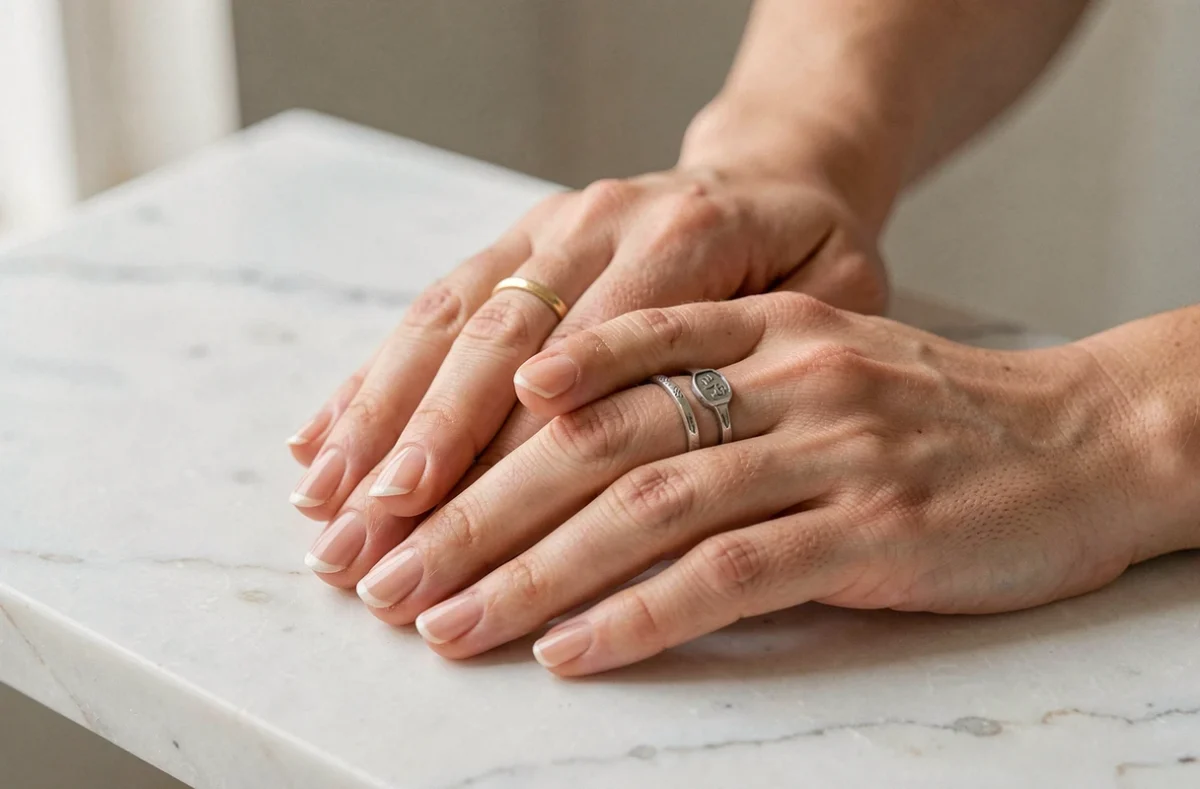
The choice of finger for wearing a ring is not limited to the symbolism of the ring finger or thumb. Several concrete parameters influence comfort and visual appeal: finger volume variation throughout the day, ring width, dominant hand, contact allergies, daily use.
This article compares these criteria finger by finger to help you make a choice suitable for your morphology and lifestyle.
Physical constraints and allergies: what conditions the choice of finger
Before thinking about symbolism or style, physical comfort sometimes eliminates certain fingers outright. Three factors deserve comparison.
The dominant hand often has slightly wider fingers. A ring worn on the left ring finger may not fit the same finger on the right hand for a right-handed person. Measuring each hand separately avoids unpleasant surprises.
The variation in volume throughout the day also plays a direct role. Heat, cold, exercise, and water retention change the diameter of the finger. Measurement recommendations favor taking size at the end of the day, at normal temperature, on the relevant hand and finger.
Finally, contact allergy to nickel or other metals can make one finger more reactive than another, depending on skin thickness and handwashing frequency. The index and thumb, often used, are more exposed to friction and moisture, which exacerbates skin reactions. For people with sensitive skin, favoring a finger less exposed to contact (ring finger, little finger) or opting for hypoallergenic materials (925 silver, gold, titanium) reduces the risk of irritation.
To delve deeper into these morphological and practical criteria, you can choose the best finger according to Madame Pervenche by consulting a dedicated guide on the topic.
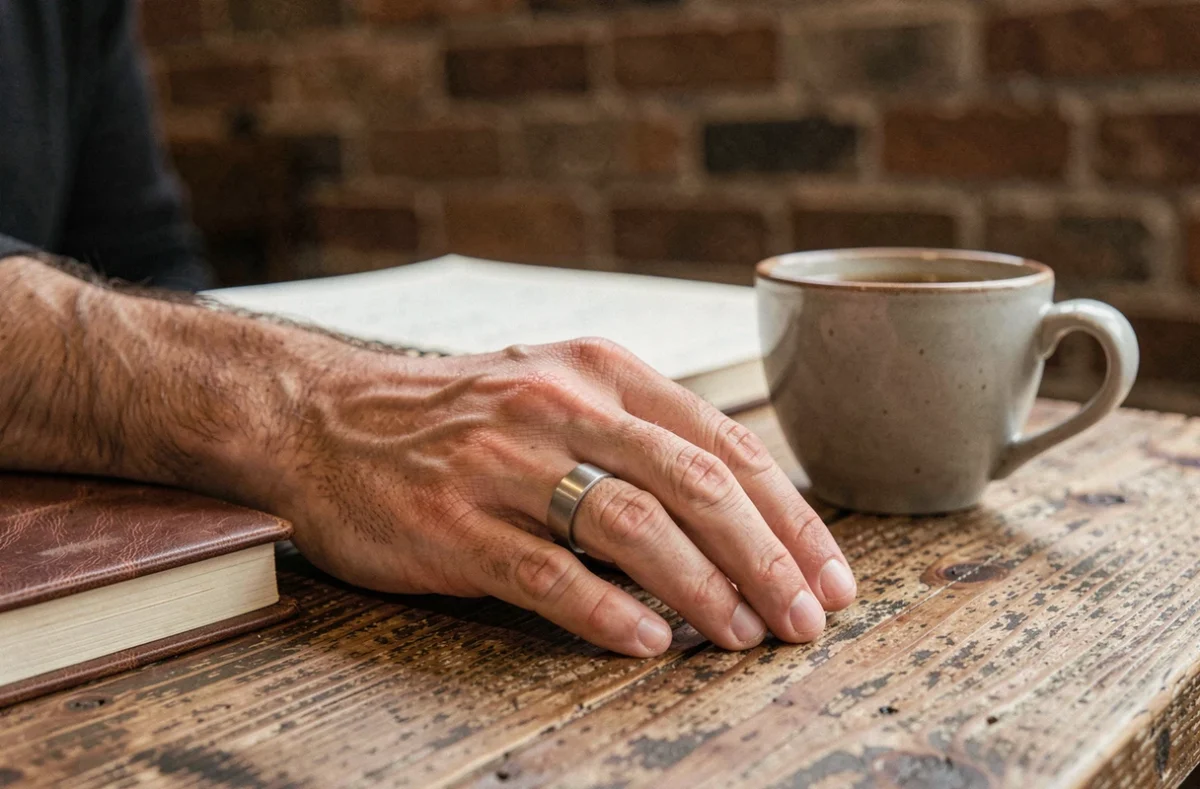
Comparison table: which finger for which daily use
The table below summarizes practical and stylistic parameters for each finger. The goal is to cross comfort, visibility, and activity constraints.
| Finger | Daily Comfort | Recommended Ring Width | Exposure to Friction | Visual Appeal |
|---|---|---|---|---|
| Thumb | Acceptable if ring is fitted, possible discomfort in grip | Wide ring tolerated (fleshy base) | High (constant grip) | Bold, atypical |
| Index | Average, very used finger | Thin to medium (avoid too wide) | High (writing, touchscreen) | Visible, declarative |
| Middle | Limited if wide ring (discomfort in writing) | Preferably thin | Moderate | Centered, balanced |
| Ring | Good, finger not mechanically stressed | All widths | Low | Classic, discreet to elegant |
| Little | Good, but narrow joint passage | Thin (limited joint passage) | Low | Subtle, signet or signet ring |
The ring and little fingers offer the best comfort-aesthetic compromise for daily wear, as they are the least used in common gestures. In contrast, the thumb and index are better suited for rings worn occasionally or in contexts where the visibility of the jewelry is paramount.
Ring width and joint passage: an underestimated criterion
A wide ring constricts more than a thin ring of the same size. This phenomenon is explained by the distribution of pressure over a larger surface area, which blocks the passage of the joint. A professional ring sizer remains the reference method to verify this point.
This criterion directly modifies the choice of finger:
- The thumb, with its fleshy base and flexible joint, accepts wide rings more easily than other fingers.
- The middle and index fingers have marked joints: a ring wider than a few millimeters can become uncomfortable after a few hours.
- The little finger, thin and with a tight joint, poorly supports thick rings: favor a delicate band or a fitted signet ring.
If you are unsure between two fingers for the same ring, test the joint passage at several times of the day. The test at the end of the day, at room temperature, provides the most reliable result.
Men’s rings and women’s rings: differences in practice by finger
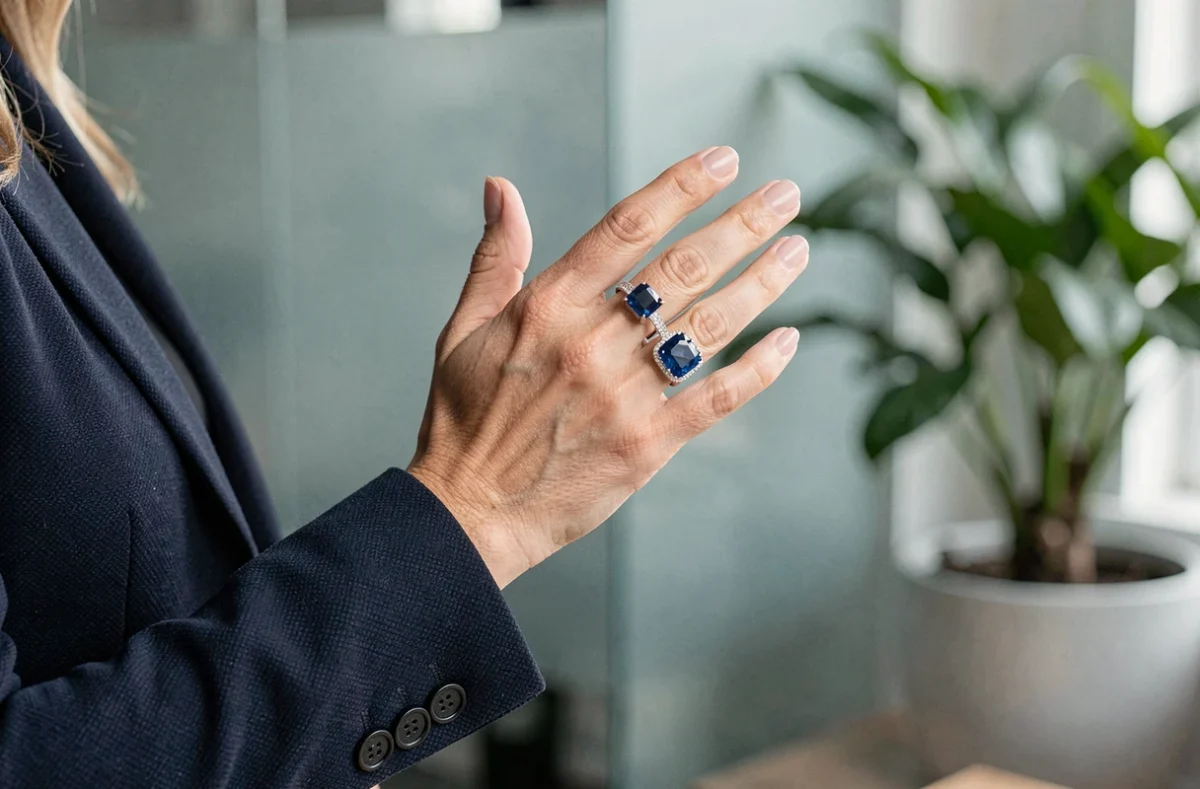
Dress codes have evolved, but some differences persist in usage. For men, the signet ring worn on the little or ring finger of the left hand remains a classic in France. The wedding band is traditionally worn on the left ring finger, while in several Eastern European countries or South America, the right ring finger is preferred.
For women, the practice of stacking (layering rings on the same finger or on neighboring fingers) changes the game. Stacking works better on the ring and middle fingers, where the base of the finger offers enough surface to accommodate several thin rings without hindering mobility.
For both genders, the thumb remains a strong stylistic choice. Conversely, the middle finger, central and visible, is suitable for stone rings or sculptural models that benefit from a showcase positioning.
Professional activity and frequent removal: adapting the finger to your lifestyle
Removing rings before sports, sleep, or manual work is recommended to limit sweat, irritation, and wear of the plating. This constraint makes certain fingers less practical depending on the profession.
A caregiver who washes their hands several dozen times a day would benefit from wearing their ring on the little finger or removing it systematically. Manual professions often exclude wearing on the index and middle fingers, where the risk of snagging is higher.
For office use (keyboard, mouse), the ring and little fingers hardly interfere with typing. The thumb, however, can hinder the use of the space bar if the ring is too bulky.
The ideal finger does not exist in absolute terms. It lies at the intersection of your hand’s morphology, the width of the chosen ring, your activities, and your skin sensitivity. A test over several days, with the ring in real conditions, remains the most reliable filter before making your choice.