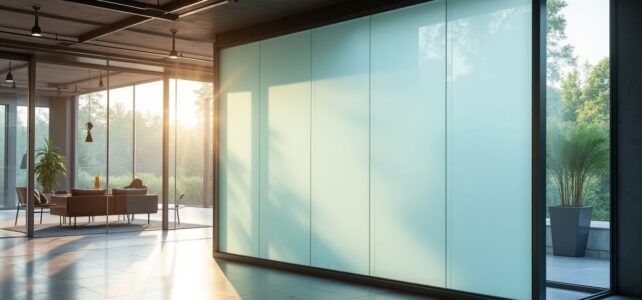
The glass wall, often synonymous with light and elegance, has become an essential element of modern architecture. Originating from artists’ studios and industrial factories, it has gradually made its way into our daily lives, transforming living spaces into a clever blend of style and functionality. By pushing the boundaries of traditional partitions, it offers a new perspective on the arrangement of interior spaces, creating bright and airy atmospheres. But what makes the glass wall such a popular choice in interior design? What are its advantages, its variations, and how can it be harmoniously integrated into your home?
The origins and evolution of the glass wall
The glass wall, with its roots deeply embedded in architectural history, has evolved over the centuries to adapt to contemporary needs and tastes.
Initially, the glass wall was primarily used in industrial buildings and artists’ studios, where natural light was essential for daily work. Sturdy metal structures were ideal for supporting large panels of glass, thereby allowing maximum illumination of the workspace. By the end of the 19th century, the use of the glass wall extended to public spaces, such as train stations and shopping arcades, where it symbolized modernity and progress.
In the decades that followed, the glass wall gained popularity among architects and interior designers. It gradually entered the residential domain, where it was used not only for its functionality but also as a decorative element. Today, glass walls come in a multitude of styles and materials, ranging from black steel structures to warm wooden frames, thus adapting to all types of interiors.
The advantages of the glass wall in interior design
Installing a glass wall in your interior offers numerous advantages that go beyond pure aesthetics. This choice can radically transform the atmosphere of a room and enhance living comfort.
- Optimization of natural light: One of the main benefits of the glass wall is its ability to let in natural light. This creates a bright and pleasant atmosphere, thereby reducing the need for artificial lighting.
- Subtle delineation of spaces: While separating different areas of the home, the glass wall maintains a sense of openness. It is ideal for open spaces where a visual distinction is desired without losing light.
- Aesthetics and customization: With a variety of designs available, the glass wall can be customized to harmonize with your home’s style, whether it is industrial, modern, or traditional.
- Sound insulation: Although the glass wall is not as insulating as a solid partition, it still helps reduce noise between rooms, thus improving acoustic comfort.
Integrating a glass wall into your home
Integrating a glass wall into your interior requires careful consideration of its location, style, and the function it should serve. This choice should be made with regard to the specifics of your living space.
To begin, determining the primary purpose of your glass wall is essential. Do you want to use it to separate a kitchen from a living room or to create a bright office? The choice of location will directly influence the selection of materials and the design of your glass wall. For example, a interior glass wall between a kitchen and a dining room may require an easy-to-maintain structure.
Next, the style of your glass wall should be in harmony with the rest of your interior decor. Metal frames may suit an industrial style, while wood will add a touch of warmth and naturalness.
Finally, remember that installing a glass wall often requires the intervention of professionals to ensure the stability and safety of the structure.