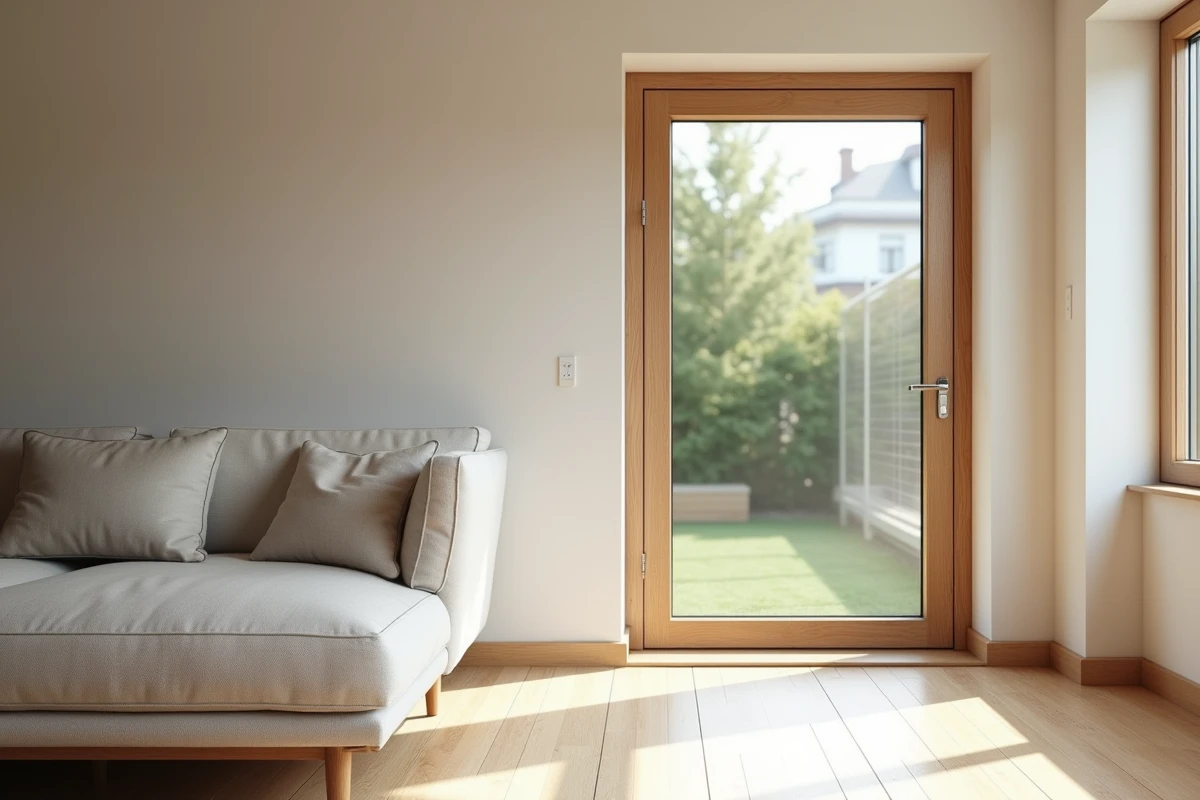
The term “fixed glass” refers to a non-opening glazing sealed within a frame that does not open. Unlike a traditional window with sashes or a tilt-and-turn mechanism, this type of joinery remains permanently closed. Its main role is to allow natural light to pass through while not permitting ventilation or direct visual access, depending on the configurations.
Fixed Glass and Civil Code: A Often Overlooked Legal Framework
Fixed glass is not just an aesthetic or technical choice. Its existence is governed by the articles 676 and 677 of the Civil Code, which distinguish between “openings” and “views” between neighboring properties. An opening is a space that allows light to pass without enabling a view into the neighbor’s property. Fixed glass precisely fulfills this function.
To be compliant, the opening must meet height requirements relative to the floor and be equipped with a fixed frame fitted with fixed glass, sometimes complemented by a mesh iron. These rules particularly apply in densely populated urban areas where the distances between buildings are reduced.
As specified in the definition of fixed glass on Immobilier et Particuliers, this solution is frequently chosen to create a light source on a party wall or a boundary wall, where an opening window would be prohibited.
The distinction between opening and view has direct consequences on neighborhood disputes. A property owner who installs translucent fixed glazing that meets the regulatory heights does not create a view in the legal sense. In contrast, clear glass in a fixed frame positioned too low could be reclassified by a court.

Fixed Frame and Thermal Insulation: What the Fixed Glass Really Changes
A fixed frame eliminates movable joints, hinges, and closing mechanisms. Fewer moving parts mean fewer weak points for air infiltration. The airtightness of a fixed frame is mechanically superior to that of an opening frame of equivalent dimensions.
The overall performance does not solely depend on the glazing. Recent technical content on window installation reminds us that the sealing around the fixed frame plays a crucial role in thermal comfort. Several elements come into play:
- Pre-compressed foam strips, which ensure water and air tightness between the fixed frame and the main structure
- Finishing sealant, applied on the interior side to block residual drafts
- Vapor barrier, used according to the installation method (applied, tunnel, or rebate) to prevent condensation within the wall thickness
Poorly installed fixed glass, even with high-performance glazing, will lose a significant part of its insulating qualities. The care taken at the junction between the fixed frame and the masonry is at least as crucial as the choice of the type of glazing.
Partial Renovation: Retaining the Existing Fixed Frame to Reduce Work
During a joinery renovation, complete replacement of the frame is not always necessary. When the structure of the existing fixed frame is sound (no rot in the wood, no deformation in the PVC or aluminum), it is possible to install new fixed glazing directly onto the existing frame.
This approach, sometimes called “renovation on existing frame,” avoids heavy masonry work. Partial removal reduces the project time and overall cost of the intervention, which explains why it is common in older houses where the original structure remains structurally reliable.
Field feedback varies on this point: some professionals believe that retaining an old fixed frame limits actual thermal gains, as older generation profiles often have thermal bridges. Others argue that the cost-benefit ratio remains favorable, especially when the primary goal is to bring in light rather than achieve maximum energy performance.
Fixed Glazing and Security: A Common Confusion to Clarify
Fixed glass is not automatically security glazing. The fact that a frame is fixed does not indicate the glass’s resistance to impacts or attempted break-ins. This confusion is widespread, even among individuals who associate “fixed” with “solid.”
For fixed glazing to offer anti-burglary protection, it must incorporate specific treatment: lamination with PVB film, tempered glass, or a combination of both. A standard fixed glass can break just as easily as a traditional opening glazing if it has not received appropriate treatment.
Before choosing fixed glass for security reasons (ground floor exposure, commercial premises), it is essential to check the classification of the glazing according to current standards. The fixed frame prevents opening, which constitutes a first barrier, but does not replace burglary-resistant glazing.
Fixed Glass in PVC, Wood, or Aluminum Joinery: Which Material for the Frame
The choice of frame material directly influences the durability and performance of fixed glass. Each option has distinct characteristics:
- PVC offers a good thermal insulation coefficient at a moderate cost, but its profiles are thicker, slightly reducing the glazed area
- Wood maintains a traditional appearance suitable for heritage renovations, with regular maintenance required (stain, paint)
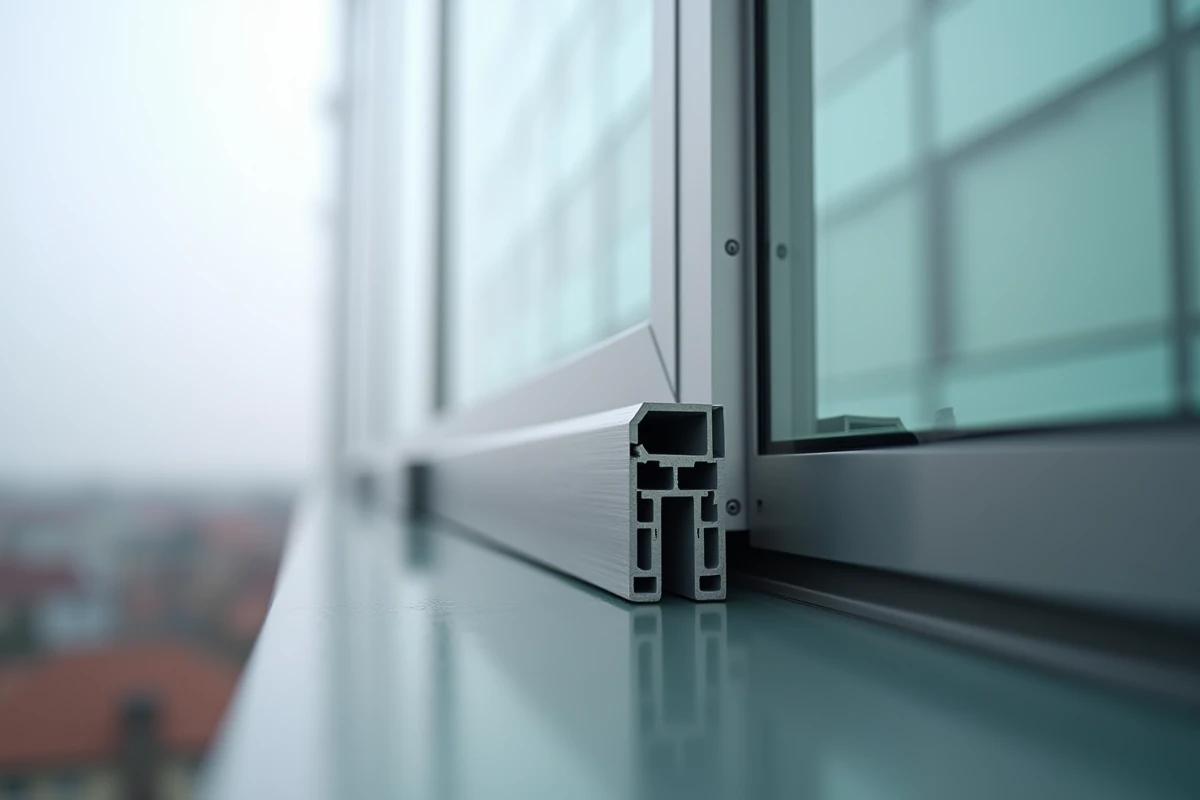
- Aluminum allows for slim profiles that maximize light intake, with high durability and almost no maintenance
The frame material also determines the slimness of the profile and thus the amount of light transmitted, a central criterion for glazing whose sole function is natural lighting.
Fixed glass remains a precise technical solution, halfway between traditional joinery and solid walls. Its relevance depends on the legal context, the condition of the building, and the desired objective. A well-installed fixed frame, with careful sealing and glazing suited to the use, fulfills its role for decades without intervention.