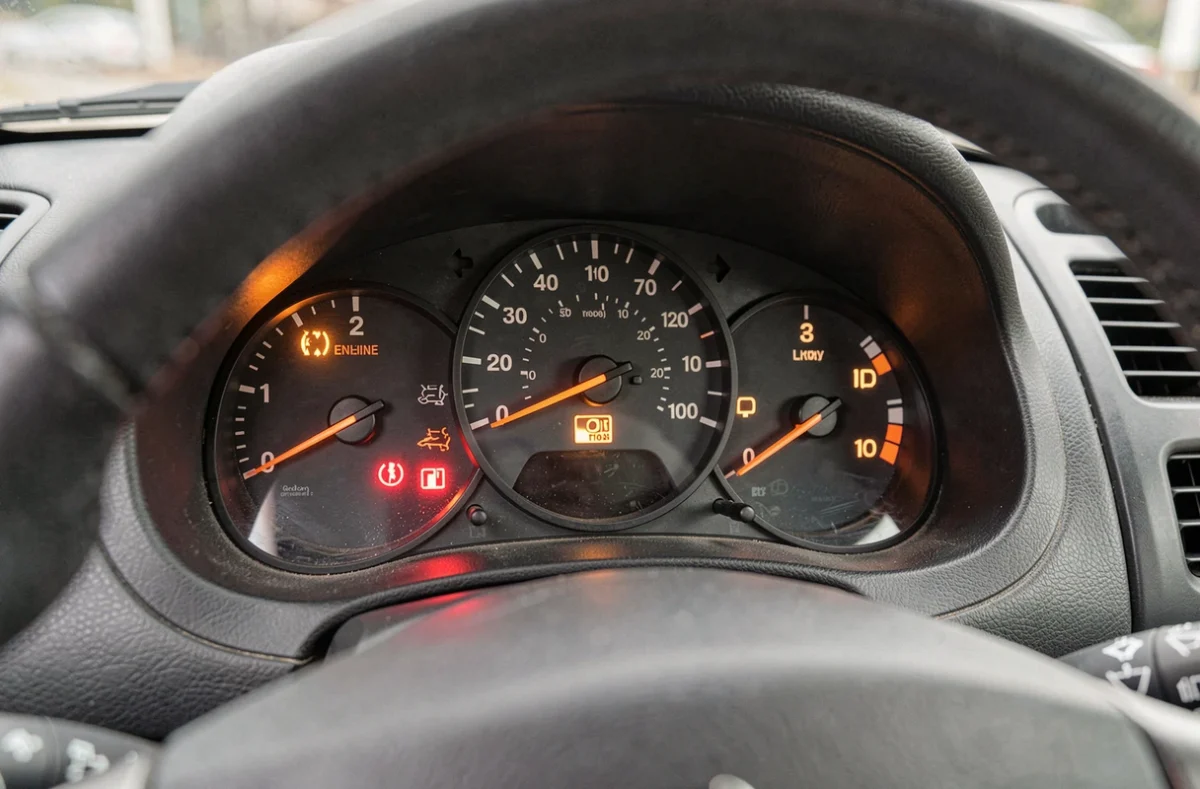
The dashboard warning lights on the Peugeot 206 operate according to a standardized color code: green for an active function, orange for a malfunction to monitor, and red for an alert that requires stopping the vehicle. Each symbol corresponds to a specific sensor connected to the BSI (Intelligent Servitude Module), the central electronic module that collects and redistributes information between the various components of the car.
Faulty BSI on Peugeot 206: when the lights lie
Before looking for a mechanical fault behind an illuminated warning light, one must consider a purely electronic cause. In 206 models that exceed 100,000 to 150,000 km, specialized garages observe an increase in BSI failures.
The symptoms are recognizable: several warning lights illuminate simultaneously without apparent logic, the dashboard turns off and then back on, and the gauges display inconsistent values. These erratic behaviors do not necessarily indicate an engine failure or a braking problem. The BSI itself malfunctions and sends false alerts.
A common cause of these failures is water infiltration into the cabin. Aging windshield or door seals allow moisture to enter, which gradually corrodes the circuits of the module.
When a mechanic identifies this type of problem, the repair often involves cleaning the connectors, re-soldering weakened components, or selectively replacing worn capacitors. Identifying the Peugeot 206 dashboard warning lights that illuminate without mechanical reason helps avoid unnecessary diagnostics and inflated bills.
Red lights on Peugeot 206: immediate engine stop
A red light always means the same thing: turn off the engine as soon as possible and do not continue driving. Three red lights are most commonly found on the 206.
Engine oil pressure light
This symbol in the shape of a canister lights up when the oil pressure drops below the minimum threshold detected by the sensor. Driving without sufficient oil pressure causes metal-to-metal contact in the engine. A few minutes are enough to irreversibly damage the crankshaft bearings.
The first reflex is to check the level on the dipstick. If the level is correct, the problem lies with the pressure sensor or the oil pump, both of which require workshop diagnostics.
Coolant temperature light
The red thermometer indicates engine overheating. On the 206, the usual causes are a coolant level that is too low, a thermostat stuck in the closed position, or a radiator fan that no longer activates.
Turn off the engine and wait for complete cooling before opening the expansion tank cap. Opening a pressurized cooling system exposes you to serious burns.
STOP light
The STOP light always illuminates in conjunction with another red light. It confirms the severity of the associated alert. If it appears alone, it is generally an electrical fault in the dashboard, often related to the BSI mentioned above.
Orange lights on 206: diagnosis required
Orange lights do not require immediate stopping, but indicate a malfunction that will worsen without intervention.
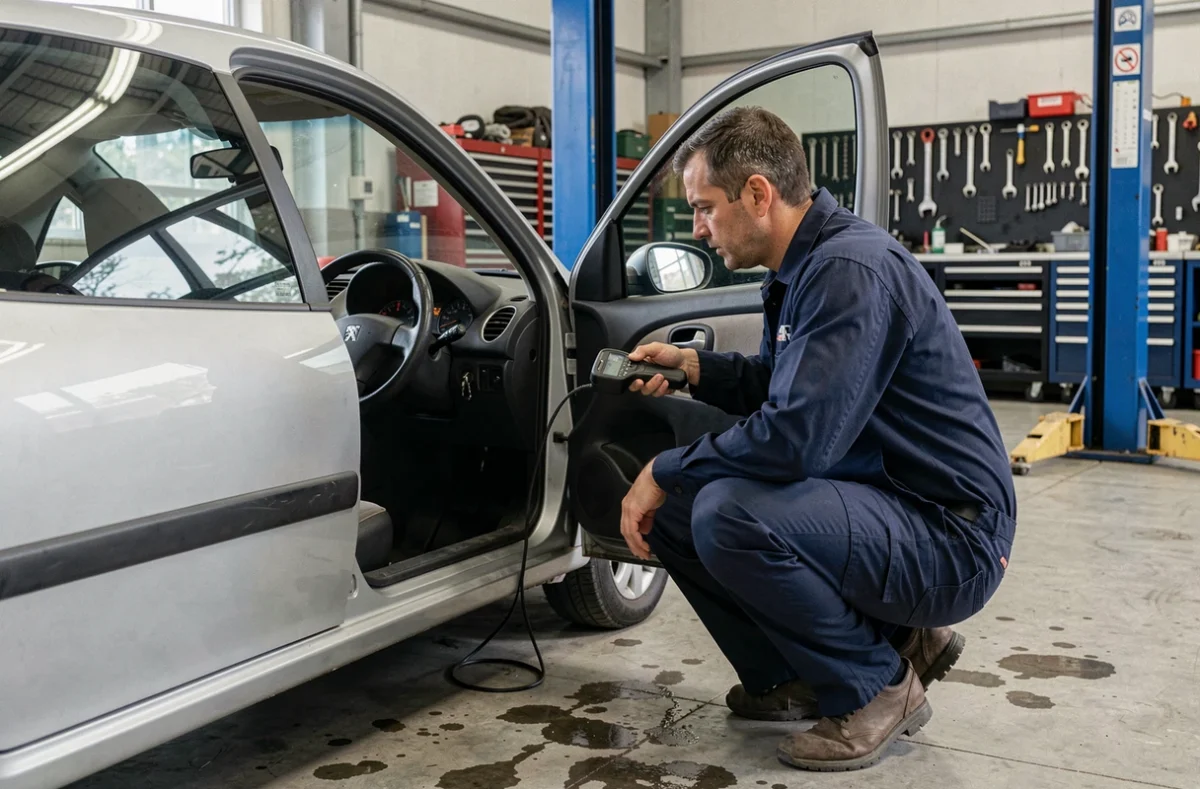
- Engine light (injection): this stylized engine-shaped indicator lights up when the ECU detects a fault in the injection, ignition, or anti-pollution circuit. On HDi versions, it frequently indicates a problem with the rail pressure sensor or a clogged particulate filter. A diagnostic scan (OBD tool) allows for reading the specific fault code.
- ABS light: it indicates that the anti-lock braking system is disabled. Standard braking remains operational, but the wheels may lock during emergency braking. Clogged wheel sensors or damaged wiring are the most common causes on aging 206s.
- Battery light: this battery symbol indicates a charging fault. The alternator is no longer properly charging the battery, or the accessory belt is slipping. The vehicle runs on the battery’s electrical reserve, which generally allows for a few dozen kilometers before total failure.
Engine light on and technical inspection: what has changed
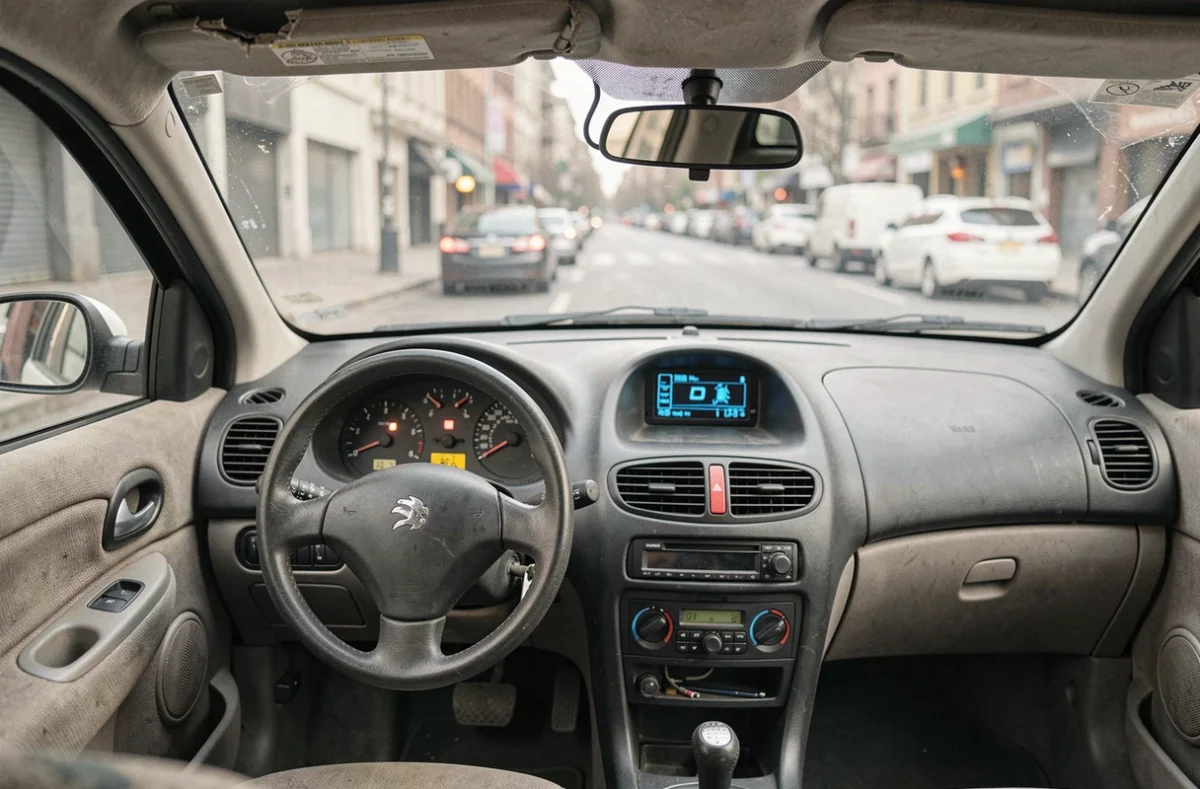
A permanently illuminated engine light is now a reason for a re-inspection during the technical inspection. The inspector checks that all dashboard indicators function correctly when the ignition is turned on, then turn off once the engine starts.
If the injection light remains illuminated, the vehicle is rejected. For owners of 206s with a chronic engine light, the fault must be resolved before presenting the car. Simply erasing the fault code with a scanner is not enough if the problem persists: the light will turn back on after a few driving cycles.
On older 206s, a permanent engine light is often linked to a lambda sensor at the end of its life or a degraded catalyst. These parts have a limited lifespan, and their replacement remains the only sustainable solution to turn off the light and pass the technical inspection.
Electronic repair of the Peugeot 206 dashboard
When the problem does not come from the engine or the sensors but from the dashboard itself, replacing the entire instrument cluster is not the only option. Specialized automotive electronics workshops offer targeted repairs.
The most common failures of the cluster are micro-soldering weakened by vibrations and thermal cycles, capacitors whose capacity has decreased over time, or ribbon cables with cracked conductive tracks. Repairing these components costs significantly less than replacing the entire cluster.
After a repair of the BSI or the instrument cluster, reprogramming is necessary to re-associate the module with the engine ECU and the odometer. This operation is done at a dealership or with an automotive electrician equipped with the manufacturer’s software.
The Peugeot 206 remains a vehicle whose electronics, although robust originally, show their age. Distinguishing a true mechanical fault from an electronic drift of the BSI or the instrument cluster allows for directing the diagnosis towards the correct cause and avoiding the replacement of perfectly functioning mechanical parts.