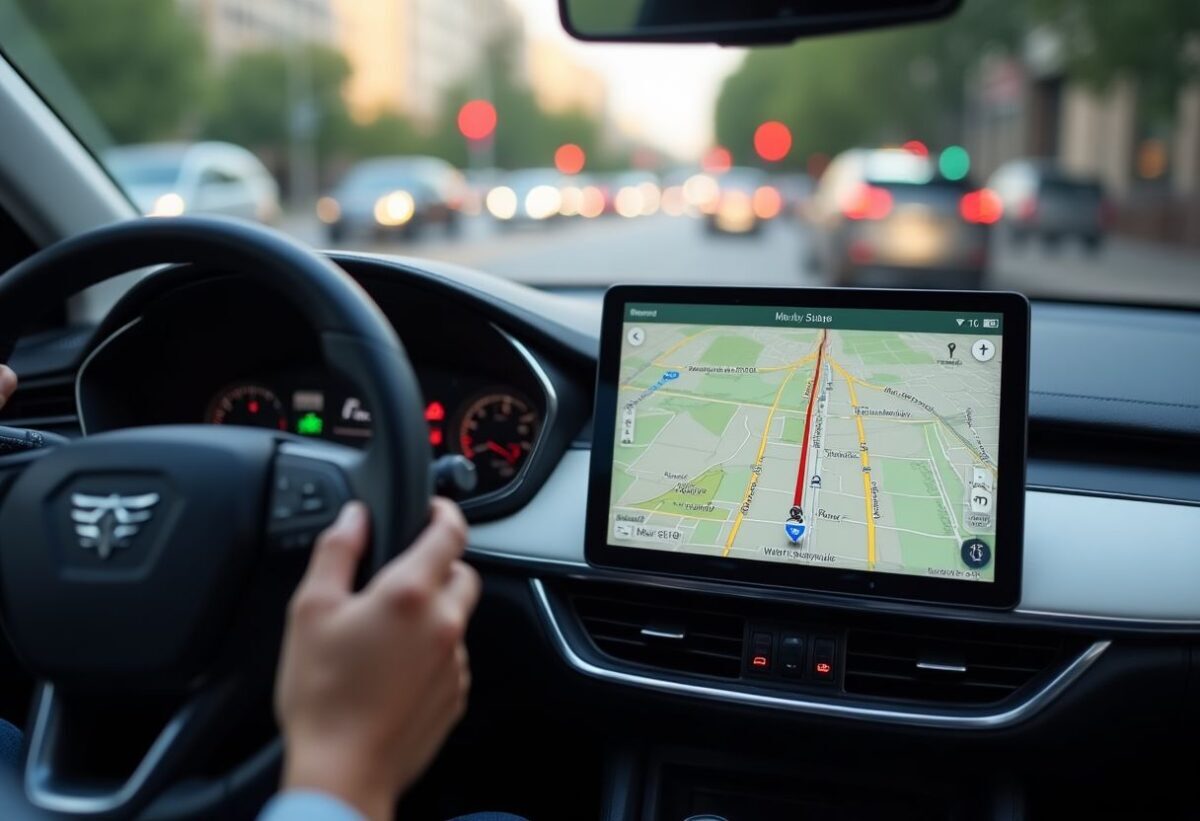
Vehicle geolocation is now at the heart of technological innovations that redefine our relationship with mobility and fleet management. This technology, which allows for real-time tracking of a car or truck’s location, has various applications ranging from driver safety to route optimization and reducing operational costs. Beyond simple technical aspects, geolocation transforms the way businesses and individuals interact with their vehicles, paving the way for a new era of connectivity.
The foundations of vehicle geolocation
Understanding how geolocation works involves looking at the technologies that underpin it. GPS, or Global Positioning System, plays a key role in this field.
The GPS system uses a network of satellites that transmit signals to receivers on Earth. These receivers, typically installed in vehicles, calculate their position by triangulating information from multiple satellites. The result is an accurate location that can be used for a variety of applications.
- GPS: This system is universally recognized for its accuracy and reliability in geolocation.
- GLONASS: An alternative to GPS, the Russian system offers global coverage and additional redundancy.
- Cellular technologies: In addition to satellites, mobile phone networks can provide location information based on triangulating cell towers.
The undeniable advantages of geolocation
The integration of geolocation into modern vehicles offers a multitude of benefits for fleet managers as well as individual drivers.
Companies can track the location of their vehicles in real-time, making route management easier, enhancing safety, and reducing downtime. This leads to increased efficiency and significant fuel savings. For individuals, knowing where their vehicle is at all times provides peace of mind, especially in the event of theft.
- Route optimization: By analyzing real-time data, fleet managers can adjust routes to avoid traffic jams.
- Cost reduction: Better resource management translates into savings on fuel and vehicle maintenance.
- Increased safety: In an emergency, the precise location of a vehicle can facilitate rapid intervention by emergency services.
- Theft assistance: Geolocation allows for tracking a stolen vehicle, increasing the chances of recovery.
The challenges and stakes of geolocation
While vehicle geolocation represents a valuable asset, it also raises crucial questions regarding privacy and data security.
Users and companies must ensure the protection of sensitive data collected by these systems. Compliance with data protection regulations is imperative to avoid abuses and violations of individuals’ privacy.
At the same time, the reliability of geolocation systems can be challenged by various environmental factors, such as weather conditions or electromagnetic interference.
- Data protection: A rigorous management of collected information is necessary to ensure confidentiality.
- Reliability: Geolocation must be accurate and consistent; otherwise, it risks losing its effectiveness.
- Legal compliance: Privacy protection laws vary by country, requiring constant vigilance from service providers.